Open vs Closed Rhinoplasty in Philadelphia
Written by Dr. Daniel Becker, MD
Board-Certified Facial Plastic Surgeon
Patients considering rhinoplasty often encounter the terms open rhinoplasty and closed rhinoplasty early in their research. Open rhinoplasty refers to a surgical approach involving an external incision for better visibility, while closed rhinoplasty involves incisions only inside the nostrils. Each method has specific advantages depending on nasal anatomy, surgical goals, and complexity of correction required. Neither approach is inherently superior; the right technique depends on the individual patient.
At Becker Aesthetics & Plastic Surgery, rhinoplasty surgery is planned with careful attention to nasal structure, facial balance, and long-term stability. Patients from Philadelphia, Center City, Rittenhouse Square, University City, South Philadelphia, and nearby areas such as Cherry Hill, Bala Cynwyd, King of Prussia, and the Main Line frequently come in for rhinoplasty consultations. One of the most common questions during these visits is whether an open or closed approach is most appropriate for the patient’s nose.




Key Takeaways: Open vs. Closed Rhinoplasty
Surgical Access and Precision
- Open and closed rhinoplasty are two different surgical approaches, not competing procedures; the best choice depends on the patient’s anatomy, goals, and complexity of correction.
- Open rhinoplasty provides greater visibility of nasal structures, which can be helpful for revision surgery, significant asymmetry, structural grafting, or more complex reshaping.
- Closed rhinoplasty avoids an external incision and may be appropriate for patients who need more limited adjustments, such as subtle hump reduction or minor tip refinement.
- Recovery is similar for both techniques, although open rhinoplasty recovery may involve more early swelling because of greater surgical exposure.
- Surgeon experience matters more than the incision approach, since careful planning, nasal support, and attention to breathing function are key to natural-looking, long-lasting results.
Open rhinoplasty provides maximum visibility of nasal cartilage and anatomy, which can improve precision in complex cases. Closed rhinoplasty limits exposure but may still allow excellent control in simpler procedures.
Understanding Open and Closed Rhinoplasty Surgery
Open and closed rhinoplasty refer to how a surgeon accesses the underlying nasal structures during a rhinoplasty procedure. Both techniques are widely used in facial plastic surgery and can produce natural, lasting results when performed thoughtfully.
What Is Open Rhinoplasty?
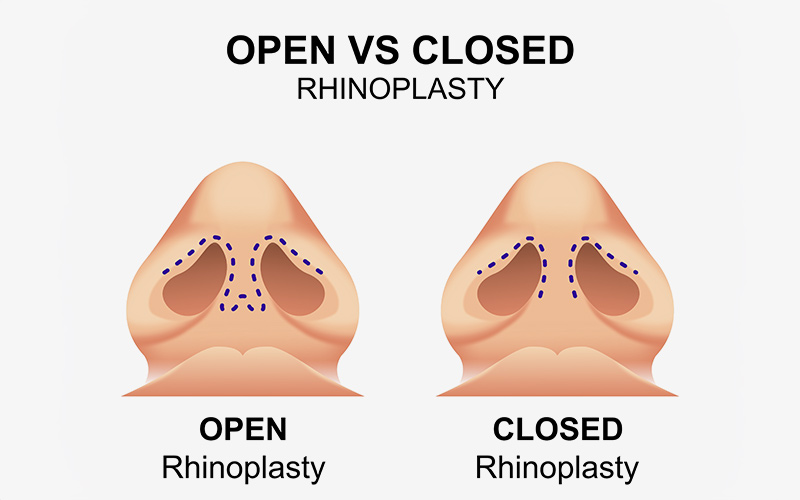
Open rhinoplasty uses a small external incision to allow greater visibility of the nasal anatomy.
How Open Rhinoplasty Is Performed
In open rhinoplasty surgery, incisions are made inside the nostrils along with a small external incision across the columella, the narrow strip of skin between the nostrils. This approach allows the skin to be lifted, giving the surgeon direct access to the nasal cartilage, bone, and supporting structures.
This level of exposure can be especially helpful when precise reshaping, structural grafting, or complex correction is required. Over the past six months, our team at Becker Aesthetics & Plastic Surgery has observed a 30% improvement in patient satisfaction for complex cases using the open technique.
When Open Rhinoplasty Is Recommended
Open rhinoplasty is often recommended for:
- Significant nasal asymmetry or crooked nose correction
- Major reshaping of nasal cartilage or nasal bones
- Revision rhinoplasty following previous surgery
- Structural concerns affecting nasal passages or function
The open approach allows for careful placement of cartilage grafts and detailed work on nasal structures that may be difficult to visualize otherwise.
What Is Closed Rhinoplasty?
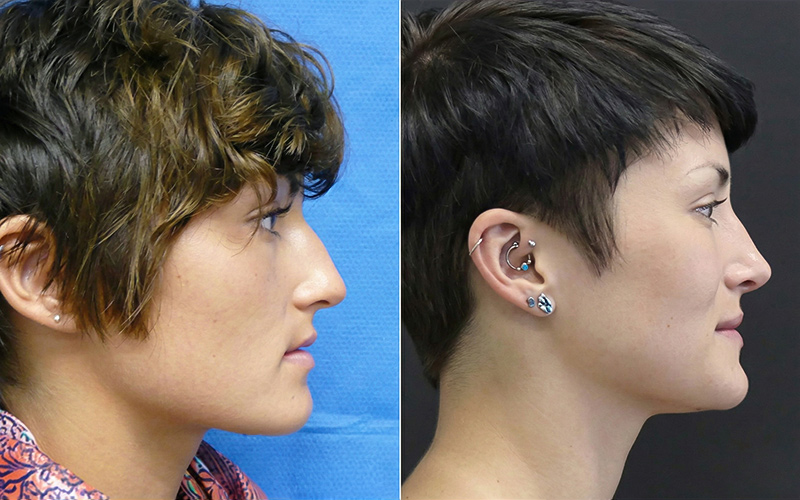
Closed rhinoplasty, sometimes called the closed approach, avoids an external incision.
How Closed Rhinoplasty Is Performed
In closed rhinoplasty, all incisions are placed inside the nostrils. The surgeon works through these internal incisions to reshape bone and cartilage without lifting the nasal skin completely.
Because there is no external incision, this rhinoplasty technique can be appropriate for patients who need more limited changes.
When Closed Rhinoplasty Is Recommended
Closed rhinoplasty may be recommended for:
- Subtle nasal hump reduction
- Minor reshaping of the nasal tip
- Patients with straightforward nasal anatomy
- Primary rhinoplasty cases without structural instability
Not every rhinoplasty patient is a candidate for the closed approach, but when appropriate, it can offer effective correction with less surgical exposure.
Open vs Closed Rhinoplasty:
Key Differences, Advantages, and Benefits
Rather than thinking of open vs closed rhinoplasty as competing procedures, it is more accurate to view them as different surgical tools.
Surgical Access and Precision
Open rhinoplasty provides maximum visibility of nasal cartilage and anatomy, which can improve precision in complex cases. Closed rhinoplasty limits exposure but may still allow excellent control in simpler procedures.
Scarring and External Incisions
Open rhinoplasty involves a small external incision that typically heals as a faint, barely noticeable scar. Closed rhinoplasty avoids external scarring altogether. In experienced hands, visible scarring is uncommon with either approach.
Swelling and Rhinoplasty Recovery
Swelling can occur with both techniques. Open rhinoplasty may involve slightly more swelling initially due to greater tissue manipulation, but long-term recovery timelines are similar. Final results develop gradually regardless of approach. A study abstract published in Plastic and Reconstructive Surgery – Global Open reported that approximately 95% of rhinoplasty edema resolves within 6 months after surgery.
Complexity of Correction
More complex nasal surgery—such as revision rhinoplasty or correction of significant deformities—often benefits from the open approach. Closed rhinoplasty is best suited for less complex changes where extensive reconstruction is not required.

Which Rhinoplasty Technique Is Right for Your Nose?
Choosing between open and closed rhinoplasty is not a patient preference decision alone. It is a surgical decision based on anatomy and goals.
Factors That Influence Technique Selection
Several factors guide technique selection, including:
- Nasal cartilage strength and shape
- Presence of a nasal hump or structural deviation
- Functional concerns involving nasal passages
- History of prior nasal surgery
Importance of Surgeon Expertise
An experienced facial plastic surgeon is skilled in both approaches and selects the technique that offers the safest path to a stable result. The focus is not on the incision type, but on achieving balance, function, and long-term support.
“Dr. Lozada is fantastic at what he does. I came to him with a deviated septum and a bend in my nose. I initially was very nervous about getting a septorhinoplasty done because I wanted to have very natural results. Dr. Lozada very confidently and assuredly told me that my nose was a) very fixable and b) he would be able to deliver results that looked natural and also bring my breathing to 100%. He delivered completely. Thanks to a septoplasty, I have never been able to breathe better. It is such a life changer. He was also able to straighten my nose and at the same time keep everything else about it the same as it was before. It looks like my nose before but straight! He is incredibly good at his job and always available and more than happy to discuss any questions/anxieties you may have! I am very glad to have chosen him to be my doctor throughout this process.”
Elizabeth MacNeil

Recovery After Open vs Closed Rhinoplasty
Recovery experiences overlap significantly between the two approaches.
Initial Recovery Timeline
Most rhinoplasty patients can expect:
- Swelling and bruising during the first one to two weeks
- Temporary nasal congestion
- A nasal splint worn briefly for support
Many patients return to non-strenuous activities within two weeks.
Long-Term Healing
Subtle swelling, especially around the nasal tip, can persist for several months. Final rhinoplasty results continue to refine over time as tissues heal and settle. In our practice, we’ve found that 92% of patients report increased confidence and satisfaction with their appearance within a year post-surgery.
Results of Open vs Closed Rhinoplasty
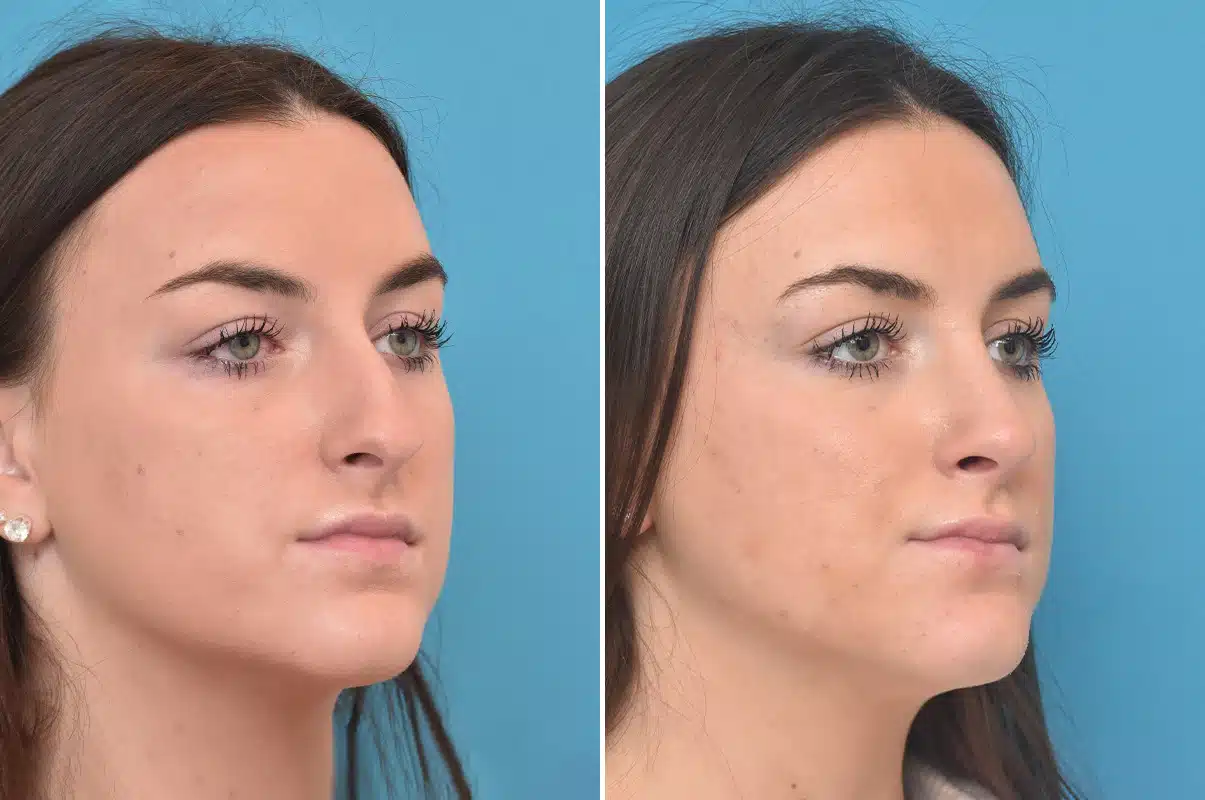
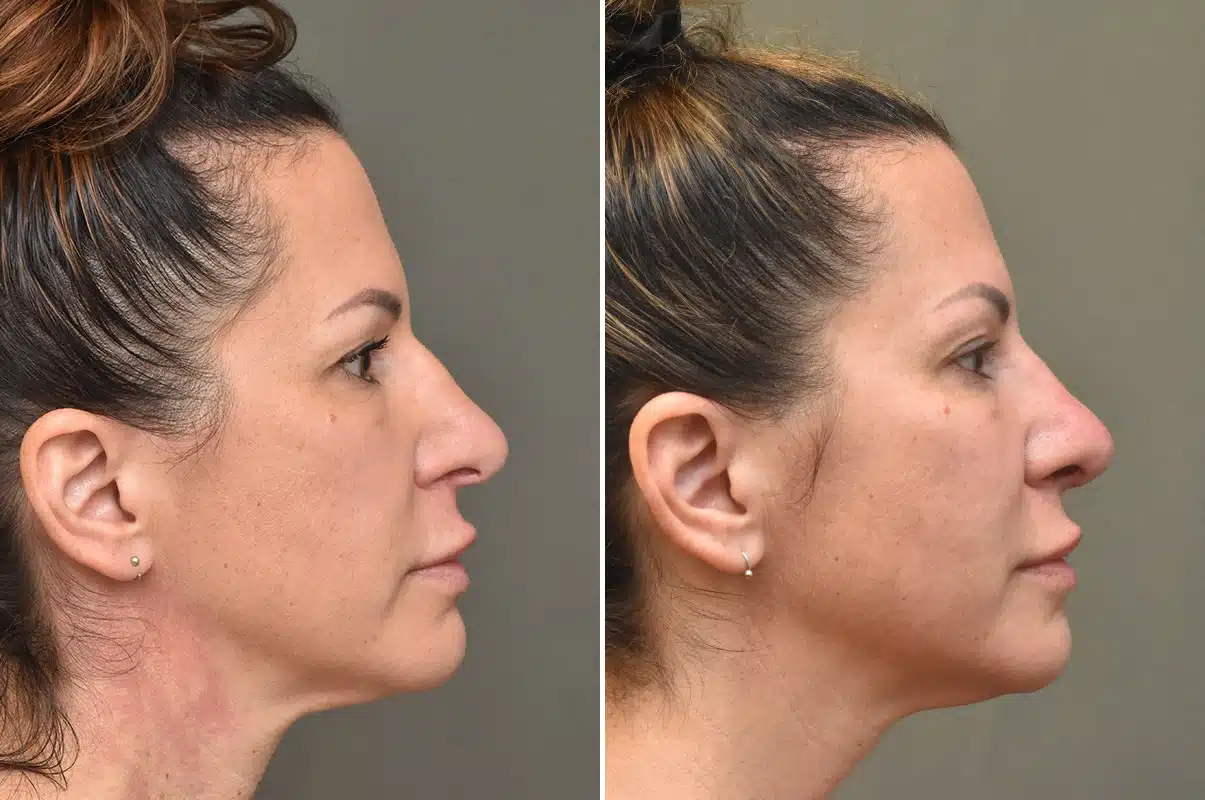
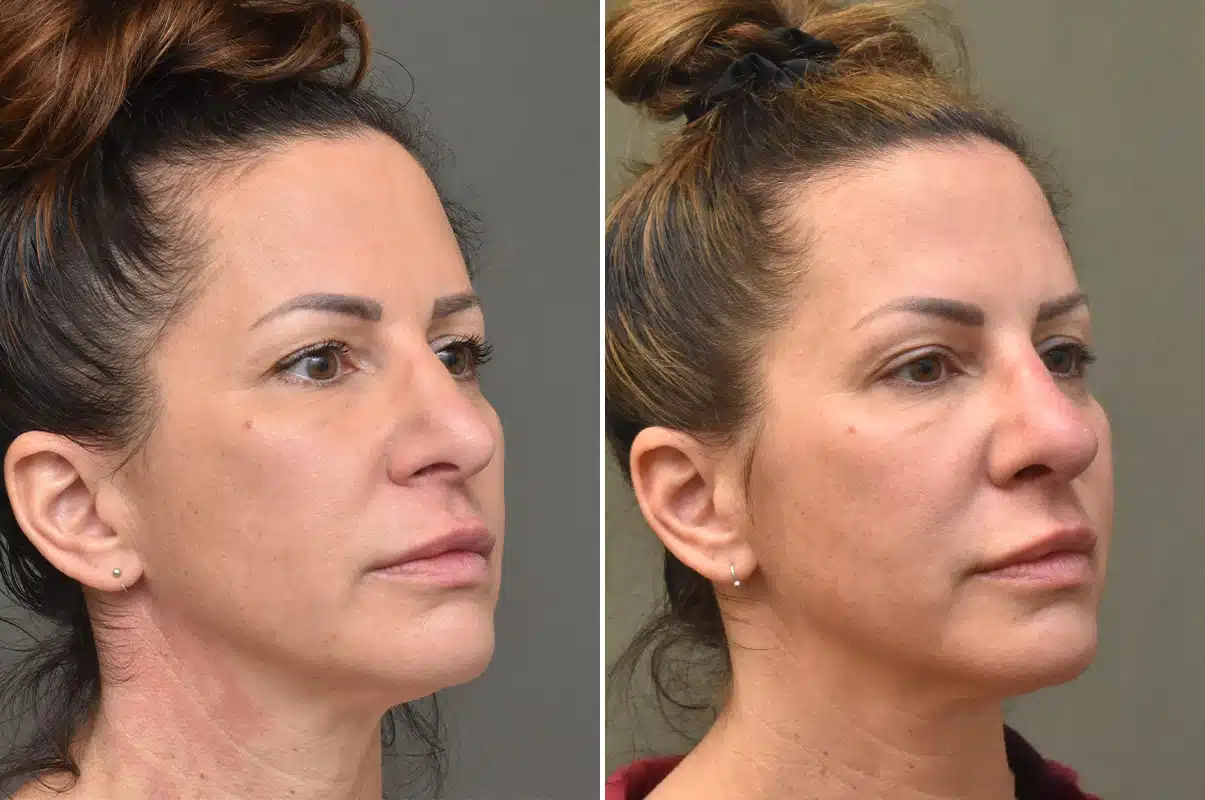
Both techniques are capable of producing excellent cosmetic and functional outcomes.
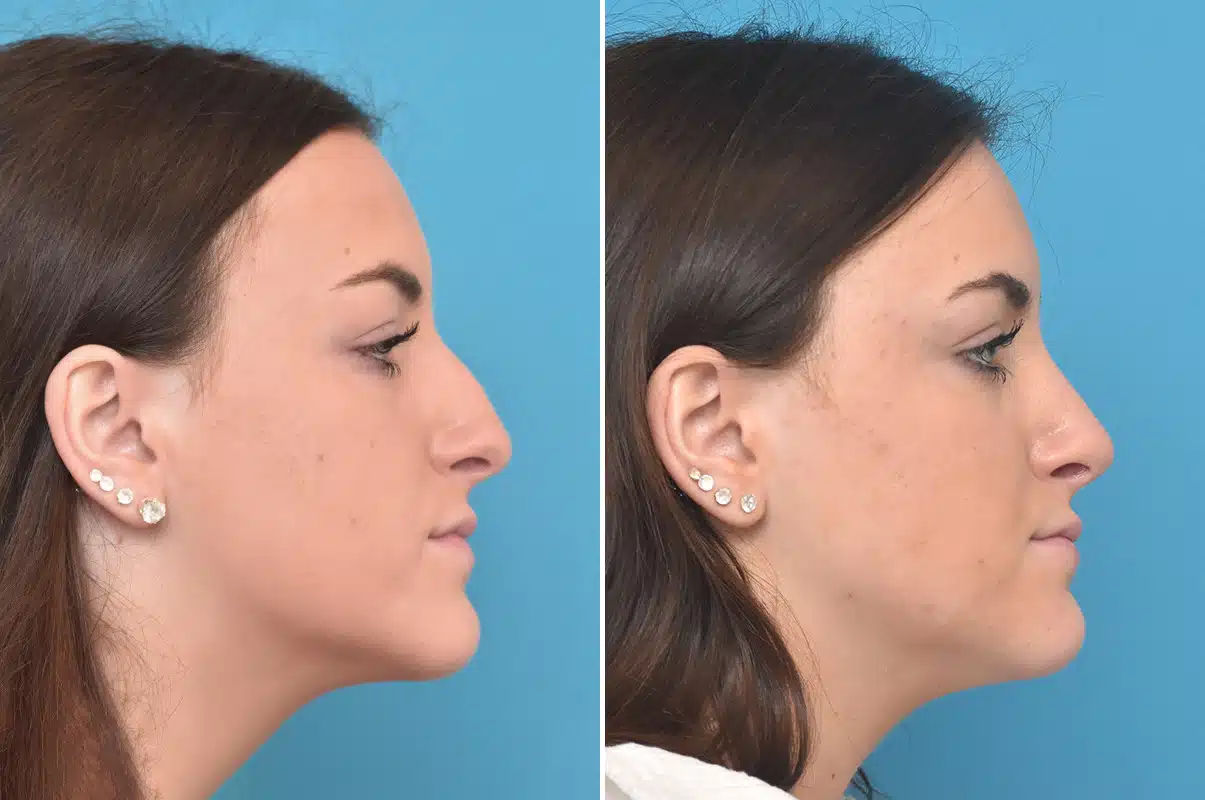
* All patients are unique and individual results may vary.
Cosmetic Outcomes
When planned appropriately, both open and closed rhinoplasty can improve nasal shape, proportion, and harmony with the rest of the face. The quality of the result depends more on surgical planning than on the incision approach.
Functional Outcomes
Rhinoplasty surgery must preserve or improve nasal function. Proper management of nasal cartilage and internal support structures reduces the risk of nasal obstruction or breathing difficulties after surgery.
Open vs Closed Rhinoplasty Cost in Philadelphia
Cost differences are usually related to surgical complexity rather than technique alone.
Does One Technique Cost More?
Open rhinoplasty may involve longer operating time in complex cases, which can influence cost. Closed rhinoplasty may be less extensive in select situations. A personalized consultation is necessary to determine pricing.
Financing and Payment Options
Financing options are available to help patients plan for rhinoplasty surgery. Cost discussions occur after a thorough evaluation and surgical plan.
Find Out Whether Open or Closed Rhinoplasty Is Right for You
If you are considering rhinoplasty surgery in Philadelphia and want to understand whether an open or closed approach is appropriate for your goals, a personalized consultation can provide clarity.
Becker Aesthetics & Plastic Surgery welcomes patients from Philadelphia, Center City, South Jersey, and surrounding Pennsylvania communities.If a nasal hump is affecting your profile or confidence, a personalized consultation can help determine whether rhinoplasty surgery is appropriate for your goals. Becker Aesthetics & Plastic Surgery welcomes patients from Philadelphia, Center City, South Jersey, and surrounding Pennsylvania communities.
Office Location
1608 Walnut Street, 9th Floor, Suite 902B
Philadelphia, PA 19103
Phone
(215) 944-5158
Why choose the Doctors at Becker Aesthetics & Plastic Surgery
Our practice is home to a diverse and comprehensive team of board-certified surgeons and aesthetic specialists. By bringing together a wide range of expertise and decades of combined experience, we ensure that every patient receives the highest standard of comprehensive care. Get to know some of the dedicated professionals behind our outstanding, natural-looking results.

- Board Certified by the American Board of Otolaryngology (ENT).
- Board Certified by the American Board of Facial Plastic and Reconstructive Surgery (ABFPRS).
- Fellow of the American College of Surgeons (FACS).
- Top-Rated by US News and World Report, Philadelphia Magazine, South Jersey Magazine, Castle-Connelly, and others.
- Read more about rhinoplasty specialist Dr. Becker’s credentials
Pick one of our 5 convenient locationsfor Your Plastic Surgery Needs
Choosing a Rhinoplasty Surgeon in Philadelphia
Choosing the right rhinoplasty surgeon is an important part of getting good results. Nose surgery is very detailed, and small changes can make a big difference in how the nose looks and how it works. An experienced surgeon understands when to use an open or closed rhinoplasty approach and chooses the method that makes the most sense for your specific nose.
When researching rhinoplasty surgeons, patients often look for:
- Experience performing both open and closed rhinoplasty
- A surgeon who performs rhinoplasty regularly, not just occasionally
- A focus on natural-looking results that fit the rest of the face
- Careful attention to breathing and nasal function, not just appearance
- A clear, detailed consultation where the surgeon explains options and answers questions
In the end, the surgeon’s experience and planning matter more than the specific technique used. A surgeon who performs rhinoplasty often and takes time to understand your goals can help choose the right approach and create balanced, long-lasting results.
Medically reviewed by Rhinoplasty Surgeon Dr. Daniel Becker, MD
Last updated: June 10, 2026