Visible scarring is one of the most common concerns patients raise before committing to a nose job. It makes sense — the nose sits at the center of the face, and the idea of a permanent mark can feel like a significant trade-off. The good news is that rhinoplasty scars are rarely the problem patients fear they will be. Whether scarring occurs at all depends largely on the surgical technique used, the skill of your surgeon, and how well your body moves through the healing process.
At Becker Aesthetics & Plastic Surgery, our board-certified facial plastic surgeons take a personalized approach to every rhinoplasty procedure, selecting the technique that best serves each patient’s anatomy and goals — with precise incision placement and scar management built into the plan from the start.

What Every Rhinoplasty Patient Should Know About Scarring
Scarring after rhinoplasty is a nuanced topic, and the answers aren’t always the same for every patient. Understanding how technique, healing, and aftercare interact gives you a much clearer picture of what to realistically expect.
- Closed rhinoplasty involves no external incisions, which means no visible scars at all.
- Open rhinoplasty leaves a small incision on the columella — the narrow strip of tissue between the nostrils — that fades significantly over time.
- Scar formation is influenced by surgical technique, skin type, and how closely patients follow post-operative care instructions.
- Most patients find that rhinoplasty scars become nearly imperceptible within a year.
- Choosing an experienced, board-certified surgeon is one of the most important factors in minimizing visible scarring.
Will Rhinoplasty Leave Visible Scars?
For most patients, rhinoplasty results in minimal scarring that is either hidden entirely or fades to the point where it is barely detectable. The answer depends primarily on which surgical approach is used.
Closed rhinoplasty produces no external scars because all incisions are made inside the nostrils. Open rhinoplasty involves a small incision across the columella, which is typically well-concealed beneath the nose and softens considerably as recovery progresses. In both cases, a skilled surgeon’s technique plays a significant role in how clean and minimal the incision site looks during and after recovery.
For the vast majority of rhinoplasty patients, scarring is not a lasting concern.
Open vs. Closed Rhinoplasty: How Each Technique Affects Scarring
The choice between open and closed rhinoplasty has the single greatest impact on whether any external scarring occurs. Both are well-established approaches used in modern nose surgery, and each has distinct advantages depending on what a patient needs.
Open Rhinoplasty
In open rhinoplasty, the surgeon makes a small incision across the columella in addition to incisions inside the nostrils. This gives the surgical team full visibility of the nasal structures underneath, making it easier to perform complex reshaping, address asymmetry, or place cartilage grafts with precision. Because of this direct access, open rhinoplasty is also easier to stabilize with structural support elements that help prevent long-term nasal weakening.
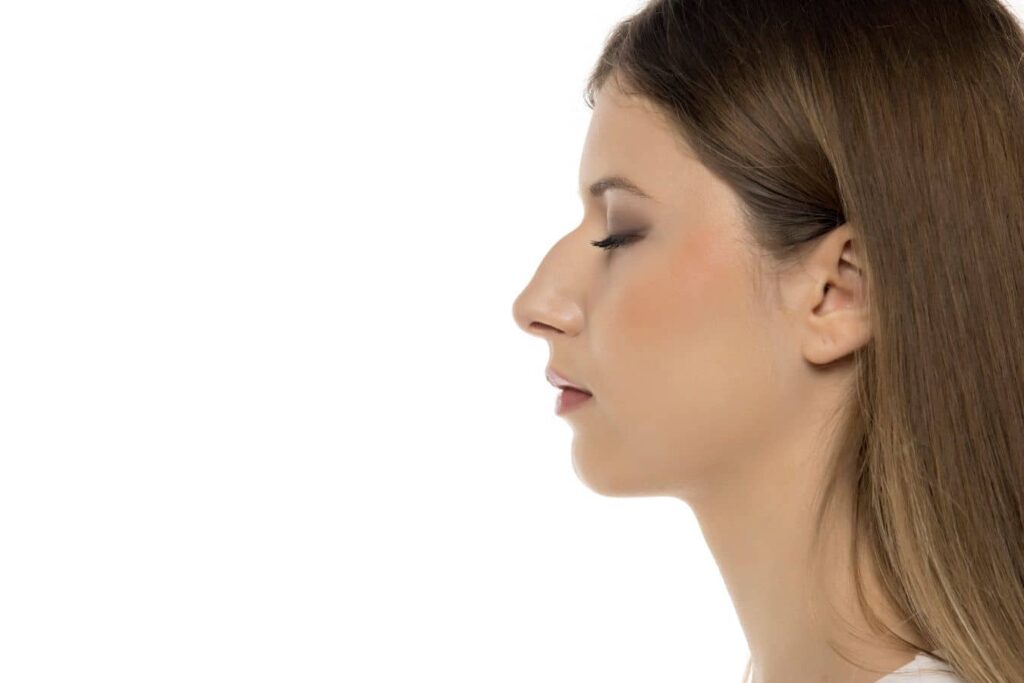
Because of that columellar incision, open rhinoplasty does leave an external mark. In the early weeks following the surgical procedure, the incision site may appear pink or slightly raised. Over the following months, it gradually softens and flattens, blending with the surrounding skin. By the one-year mark, most patients find the scar is nearly invisible in normal lighting and at a conversational distance. It is worth noting that some patients experience temporary tip numbness with this approach, which typically resolves as healing progresses.
Open rhinoplasty is typically recommended for:
- Significant reshaping of the nasal tip or bridge
- Revision rhinoplasty, where scar tissue from a prior surgery must be carefully navigated
- Structural corrections that require a higher degree of surgical access and control
- Cases where keeping the nose symmetrical requires a clear view of the entire nasal structure
Closed Rhinoplasty
In closed rhinoplasty, all incisions are made inside the nostrils, leaving no external marks whatsoever. Because the entire surgical procedure is performed through the nostrils, there is no columellar incision and no risk of visible external scarring. This approach tends to involve a shorter time in surgery, and some patients experience less swelling and a somewhat faster recovery compared to open rhinoplasty.
Closed rhinoplasty is well-suited for patients with more focused cosmetic goals — refining the nasal tip, correcting minor asymmetries, or addressing issues such as a deviated septum without requiring significant external reshaping. The trade-off is that surgeons have less direct visibility into the nasal structures, which can make the technique less practical for complex cases requiring extensive cartilage work or major reshaping.
Rhinoplasty Patient Results
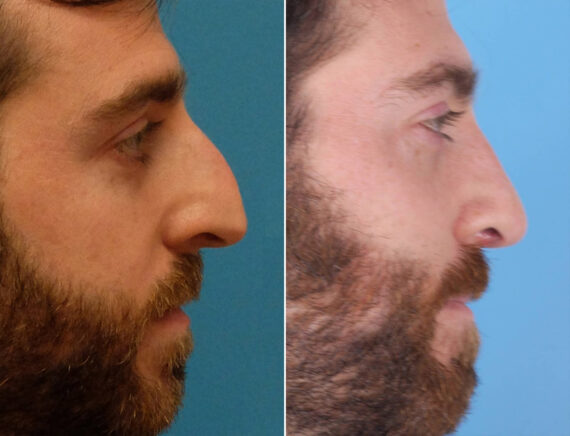
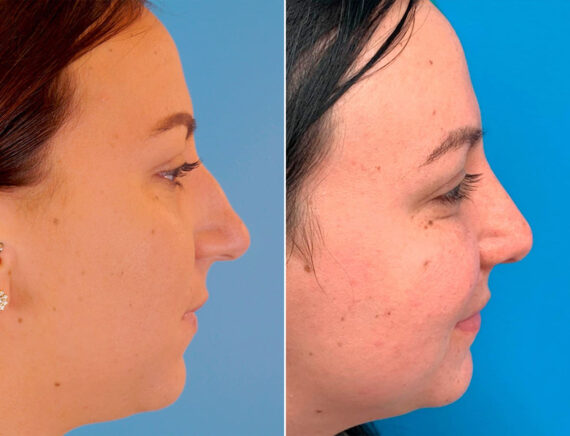
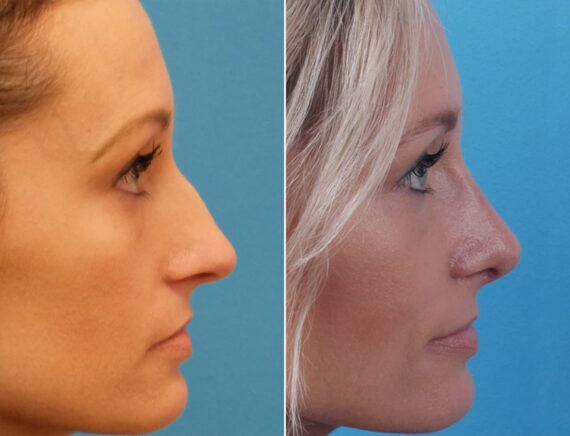
* All patients are unique and individual results may vary.
Factors That Influence Scar Healing After Rhinoplasty
Even when the same technique is used, two patients can heal quite differently. Several factors shape how a rhinoplasty scar develops and fades over time.
Skin type plays a meaningful role in the healing process. Patients with thicker skin may experience more prolonged swelling, while those with thinner skin may notice the incision site more clearly in the early weeks. Darker skin tones can be more prone to hyperpigmentation at the incision site — something your surgeon can address proactively with targeted aftercare recommendations.
Surgeon skill and incision placement are equally important. A precisely placed, well-closed incision heals more cleanly than one made without careful attention to tissue alignment. This is one of the core reasons that working with an experienced, board-certified surgeon matters so much — technique at the time of the rhinoplasty procedure directly influences what scar tissue forms and how noticeable it ultimately becomes.
Post-surgical care also has a significant impact on optimal healing. Following your surgeon’s instructions carefully, protecting the area from sun exposure, avoiding pressure on the nose, and using any recommended topical treatments all contribute meaningfully to scar reduction over time.
How Long Does Scar Healing Take?
The healing process after rhinoplasty unfolds gradually, and scar appearance changes considerably over the course of the first year.
In the first few weeks, any incision site will look its most prominent. Expect some redness, mild swelling, and firmness as the body begins the process of scar formation. This is entirely normal and is not an indicator of the final result.
Between three and twelve months, the scar fading phase begins in earnest. The tissue softens, redness diminishes, and the mark starts to blend more naturally with the surrounding skin. Patients often notice the most visible improvement during this window, and many are pleasantly surprised by how much the scar changes even without any additional scar treatments.
By the one-year mark and beyond, most open rhinoplasty scars have reached their final appearance. For the majority of patients, what remains is a faint, thin line that is difficult to detect without close inspection. Patients who underwent closed rhinoplasty, of course, have no external scar to monitor at any stage.
Choosing the Right Rhinoplasty Surgeon Matters
Experienced, board-certified facial plastic surgeons play a critical role in achieving beautiful results. Book with our specialists in Philadelphia.
Tips for Scar Reduction After Rhinoplasty
A few consistent habits during recovery can make a meaningful difference in how well an incision heals and how quickly it fades.
- Protect the nose from sun exposure, especially during the first year. UV radiation can darken a healing scar and significantly slow the fading process. Broad-spectrum SPF is important whenever you spend time outdoors.
- Ask your surgeon about topical treatments. Silicone-based gels and sheets are among the most commonly recommended options and have a strong track record for improving scar appearance over time.
- Avoid touching, picking, or applying any pressure to the nose during the healing process, as this can disrupt tissue repair at the incision site.
- Support healing from the inside out by staying well-hydrated and maintaining a balanced diet rich in nutrients that support tissue repair.
- Keep all follow-up appointments so your surgeon can monitor progress and intervene early if any scar-related concerns arise.
When to Contact Your Surgeon
Most rhinoplasty scars follow a predictable and manageable healing path, but there are situations where reaching out to your surgical team is the right call. Excess scar tissue that becomes raised, thickened, or spreads beyond the incision boundaries — known as hypertrophic scarring — may require intervention such as laser therapy, steroid injections, or other targeted scar treatments.
Signs of delayed healing, persistent redness well beyond the expected recovery window, unusual firmness at the incision site, or any indication of infection should also prompt a call to your surgeon. Caught early, most scar-related complications respond well to treatment and do not affect the long-term rhinoplasty results.
Choosing a Rhinoplasty Surgeon in Philadelphia and South Jersey
The surgeon you choose has a direct impact on scarring outcomes. Board certification, demonstrated experience with both open and closed rhinoplasty techniques, and a portfolio of before-and-after photos are all important factors to evaluate before committing to a procedure. Patients should also feel comfortable asking their surgeon which approach is recommended for their anatomy and why — clear communication during the consultation process is a strong indicator of the patient-centered care that supports the best outcomes.
At Becker Aesthetics & Plastic Surgery, our board-certified facial plastic surgeons bring extensive training and a track record of natural-looking rhinoplasty results across our Philadelphia, Princeton, Voorhees, Sewell, and Yardley locations. Every consultation is designed to give patients a thorough understanding of their options, realistic expectations for the healing process, and a surgical plan tailored to their individual nose and goals.
Putting Rhinoplasty Scarring in Perspective
Rhinoplasty scarring is far less of a concern than most patients expect going in. Whether you are a candidate for open or closed rhinoplasty, understanding how scar healing works — and what you can do to support it — makes the entire process easier to approach with confidence. To learn more about your options and what to expect from plastic surgery at Becker Aesthetics & Plastic Surgery, contact one of our New Jersey or Philadelphia area offices to schedule a consultation.
Frequently Asked Questions About Rhinoplasty Scars