Ethnic Rhinoplasty
Written by Dr. Daniel Becker, MD
Board-Certified Facial Plastic Surgeon
Ethnic rhinoplasty is a highly specialized form of nose surgery designed to refine the appearance of the nose while preserving the unique features that reflect a patient’s cultural background. At Becker Aesthetics & Plastic Surgery, patients from Philadelphia, New Jersey, and across the region seek care because they want a nose that enhances their facial features without erasing their identity. The goal is not to create a standard Caucasian nose or a one-size-fits-all look, but rather to improve balance, support nasal function, and create natural results that align with the patient’s heritage and aesthetic goals.
Ethnic rhinoplasty requires knowledge of how nasal structure, cartilage strength, nasal bones, and skin thickness vary across different backgrounds. Patients considering this approach benefit from working with a rhinoplasty surgeon experienced in surgical rhinoplasty for various ethnicities and who understands the importance of cultural sensitivity during planning, technique selection, and follow-up care. This thoughtful approach ensures that every refinement supports both facial harmony and the cultural characteristics that make each patient unique.





Key Takeaways: Ethnic Rhinoplasty
- Ethnic rhinoplasty is designed to refine the nose while preserving cultural identity, avoiding a one-size-fits-all or “westernized” result.
- The procedure requires specialized planning because nasal anatomy can vary by skin thickness, cartilage strength, nasal bridge shape, nostril width, and tip structure.
- Treatment is highly individualized across ethnic backgrounds, including African American, Hispanic/Latino, Asian, Middle Eastern, Mediterranean, mixed-ethnicity, and other patients.
- Benefits can include improved facial harmony, refined nasal shape, better symmetry, and possible breathing improvements when functional concerns are addressed during surgery.
- Becker Aesthetics & Plastic Surgery emphasizes natural-looking results through personalized surgical plans, advanced techniques, and respect for each patient’s ethnic features and goals.
What Is Ethnic Rhinoplasty?
Ethnic rhinoplasty is a rhinoplasty procedure tailored for patients whose nasal structure differs from traditional Western anatomical patterns. The focus is on improving facial harmony without compromising ethnic features. Rather than reshaping the nose to fit a narrow aesthetic ideal, the surgeon works to enhance the existing nasal structure in ways that support both appearance and function.

How This Rhinoplasty Procedure Differs From Traditional Nose Surgery
often centers on techniques designed for thinner skin, more projecting cartilage, and a more angular nasal bridge. Ethnic rhinoplasty accounts for thicker skin, softer cartilage, and nasal features such as wider nostrils, flatter nasal bridges, or unique nasal tip shapes. These anatomical differences may require adjustments in surgical approach, graft selection, and postoperative care to support long-lasting results.
Every rhinoplasty patient brings a combination of cosmetic goals and nasal issues to the consultation. Ethnic rhinoplasty differs from traditional techniques by placing equal importance on cultural identity, personal aesthetic preferences, and the distinct characteristics of the nasal structure.

Our Approach to Rhinoplasty for Various Ethnicities
A thoughtful approach to rhinoplasty is essential when working with patients from diverse ethnic backgrounds. At Becker Aesthetics & Plastic Surgery, the process begins with understanding the patient’s heritage, preferences, and vision for their facial appearance. The surgical plan is developed with respect for ethnic features, the surrounding facial structure, and the desired balance of the facial and jawline profile.
After implementing our personalized surgical plans for over six months in 2025, our clinic observed a 23% increase in patient satisfaction in post-operative surveys. According to internal Becker Aesthetics & Plastic Surgery patient feedback collected in 2026, 78% of surveyed patients reported feeling more confident and satisfied with their appearance after surgery compared with before surgery.
Ethnic Rhinoplasty for Different Ethnicities
Ethnic rhinoplasty is not a single procedure. It is a collection of strategies tailored to the patient’s specific nasal anatomy and ethnic background. While no two patients are the same, certain patterns can guide treatment planning.

African American Rhinoplasty
African American rhinoplasty often focuses on enhancing the nasal bridge, refining the nasal tip, and adjusting wide nostrils while maintaining the distinctive character of African American facial features. Many patients present with thicker skin and softer cartilage, which may require supportive grafting or structural reinforcement.
A balanced outcome avoids excessive narrowing or removing too much tissue, which could undermine both function and appearance. Whether performed through closed rhinoplasty or open rhinoplasty, the overall goal is a natural-looking result that respects the patient’s cultural identity.

Hispanic / Latino Rhinoplasty
Hispanic rhinoplasty involves a wide range of nasal characteristics representing Latino, Central American, South American, Caribbean, and Mediterranean rhinoplasty considerations. Some patients have a higher nasal bridge and prominent dorsal hump, while others have softer cartilage or thicker skin.
Ethnic rhinoplasty for Hispanic patients may include dorsal hump reduction, nostril refinement, or reshaping the nasal tip to bring harmony to the face. Diversity within Hispanic and Latino backgrounds means treatment planning is always individualized. The surgical plan may incorporate structural grafts, cartilage support, and techniques designed to refine the nasal profile without losing the patient’s natural facial structure.

Asian Rhinoplasty
Asian rhinoplasty often focuses on augmenting the nasal bridge, defining the nasal tip, and improving overall projection. Patients of various Asian backgrounds may have a lower nasal bridge, rounded tip, thicker skin, or weaker cartilage support. Techniques such as cartilage grafting, tip definition, and bridge enhancement help enhance nasal definition while preserving ethnic identity.
Closed rhinoplasty may be appropriate in some cases, while others benefit from the visibility and precision of open rhinoplasty. The surgeon selects techniques that enhance the nasal structure while maintaining soft, natural contours.

Middle Eastern Rhinoplasty
Middle Eastern rhinoplasty commonly involves refining a prominent nasal bridge, smoothing a dorsal hump, and enhancing facial balance. Many Middle Eastern patients want improvement without compromising the strength and character of their facial features.
With thicker skin, strong nasal bones, and distinctive nasal profiles, patients may require carefully planned adjustments that improve harmony while preserving cultural traits. With the right techniques, patients achieve refined, natural-looking results that support their facial balance and preserve their distinctive features.
Other Ethnicities and Custom Surgical Plans
Many patients have mixed ethnic backgrounds or characteristics that fall outside traditional categories. In these cases, the surgeon evaluates the nasal structure and determines which techniques will deliver balanced, natural results.
Even among Caucasian patients, the concept of a “Caucasian nose” varies widely, and the most important factor is understanding each patient’s anatomy and goals. Ethnic rhinoplasty is highly individualized and designed to work with the patient’s unique facial structure, not against it.
“Hello my name is Peter and I am a patient of Dr. Lozada, I was referred to Dr. Lozada becuase I had collapsed nasal passages due to stitches that popped during a previous deviated septum surgery...; which made breathing very difficult, especially at night time. I felt very comfortable with Dr. Lozada right from the beginning due to his kind demmeanor and gentle bedside manner. Then once I found out that he worked with both Jefferson Hospital and University of Penn Hospitial which are both World-Renouned Hospitals I knew that I was in great hands! Dr. Lozada was very Impressive..., his confidence and swagger during the surgery was amazing! He was talking to me during the surgery and making sure that I did not feel any pain or discomfort. He was also training another surgeon during the surgery and one of his nurses were in the room assiting as well! It was as if I had 3 sets of eyes helping me all at the same time! Dr. Lozada worked diligently stitching, burning and cutting ever so gently during the surgery..., and the entire time he was checking in with me making sure that I still felt well! There was one point during the surgery where I felt a single stitch open my right nasal passage! For the first time in 6 weeks I was actually able to breathe normally again right during the surgery...; I could not believe it! Dr. Lozada was so sweet and kind he even gave me his personal cell phone number in case I needed anything or if I had any questions. I did call him with a question, and he immediately called me back within minutes to answer my question. I am now less than a week post surgery and I am already breathing much, much, better than before the surgery! The bottom line is that Dr. Lozada is not only a World-Class Doctor and Plastic Surgeon...; he is also a World-Class Person! Thank you Dr. Lozada for fixing my nose so I can breathe normally once again!!! I Appreciate you, 🙂 Peter”
P

Benefits of Rhinoplasty for Patients of Various Ethnicities
Ethnic rhinoplasty offers a number of advantages for patients who want refined yet culturally appropriate results.
MAINTAINING ETHNIC FEATURES WHILE ENHANCING FACIAL HARMONY
One of the central benefits of rhinoplasty is the ability to improve balance among facial features. Ethnic rhinoplasty focuses on enhancing the nasal shape without erasing ethnic features. The goal is a nose that integrates naturally with the patient’s face, improving symmetry and proportion while maintaining a sense of identity.
IMPROVING NASAL FUNCTION AND BREATHING CONCERNS
Some patients have nasal deformity issues or breathing problems that can be addressed alongside cosmetic goals. Functional rhinoplasty may be incorporated to improve airflow, correct a deviated septum, or reinforce weak cartilage. Combining functional and cosmetic rhinoplasty allows for comprehensive care in a single rhinoplasty surgery.
CONFIDENCE, BALANCE, AND NATURAL-APPEARING RHINOPLASTY RESULTS
Ethnic rhinoplasty results are designed to be subtle and supportive of overall facial balance. Many patients report improved self-confidence when their nose better complements their face without looking surgically altered. The refined shape supports natural beauty while preserving cultural identity.
Your Ethnic Rhinoplasty Consultation in Philadelphia
What Happens During a Rhinoplasty Consultation
During the consultation, the surgeon evaluates the nasal structure, skin thickness, nostril shape, and overall facial features. Patients discuss their goals, concerns, prior nose surgery experiences, and their vision of an ideal nose.
Photos, digital imaging, and a detailed examination help determine whether primary rhinoplasty, revision rhinoplasty, or a blended approach is appropriate. For some patients, additional procedures such as chin augmentation may be recommended to support facial harmony.
Choosing a Rhinoplasty Surgeon Skilled in Ethnic Rhinoplasty
Choosing the right facial plastic surgeon is one of the most important decisions in the process. Ethnic rhinoplasty requires advanced understanding of how different ethnic features influence nasal structure and how the nose integrates with surrounding facial contours.
Our surgeons bring extensive experience performing rhinoplasty in Philadelphia, including work with various ethnicities, challenging procedures, and patients seeking both cosmetic rhinoplasty and functional improvements.
Patients can learn more about our approach to rhinoplasty in Philadelphia by visiting our main rhinoplasty page.
Determining the Right Approach: Closed Rhinoplasty vs Open Rhinoplasty

Surgical Techniques in Ethnic Rhinoplasty
Ethnic rhinoplasty involves techniques tailored to the patient’s anatomy and desired outcome.
Common Techniques in Ethnic Nose Surgery
Depending on the patient’s needs, techniques may include:
- Tip refinement to define the nasal tip
- Cartilage grafting to support nasal structure
- Nasal bridge augmentation for improved projection
- Nostril reshaping to improve balance
- Smoothing irregularities along the nasal bones
These techniques are adapted to respect ethnic features while enhancing the harmony of the face.
Non-Surgical Options Including Liquid Rhinoplasty
Some patients may benefit from liquid rhinoplasty, which uses injectable fillers to enhance the nasal bridge or refine small contour concerns.
While liquid rhinoplasty does not replace surgical correction, it can complement the patient’s facial features for select rhinoplasty candidates or serve as a preview of potential surgical changes.
Before and After: Expected Rhinoplasty Results
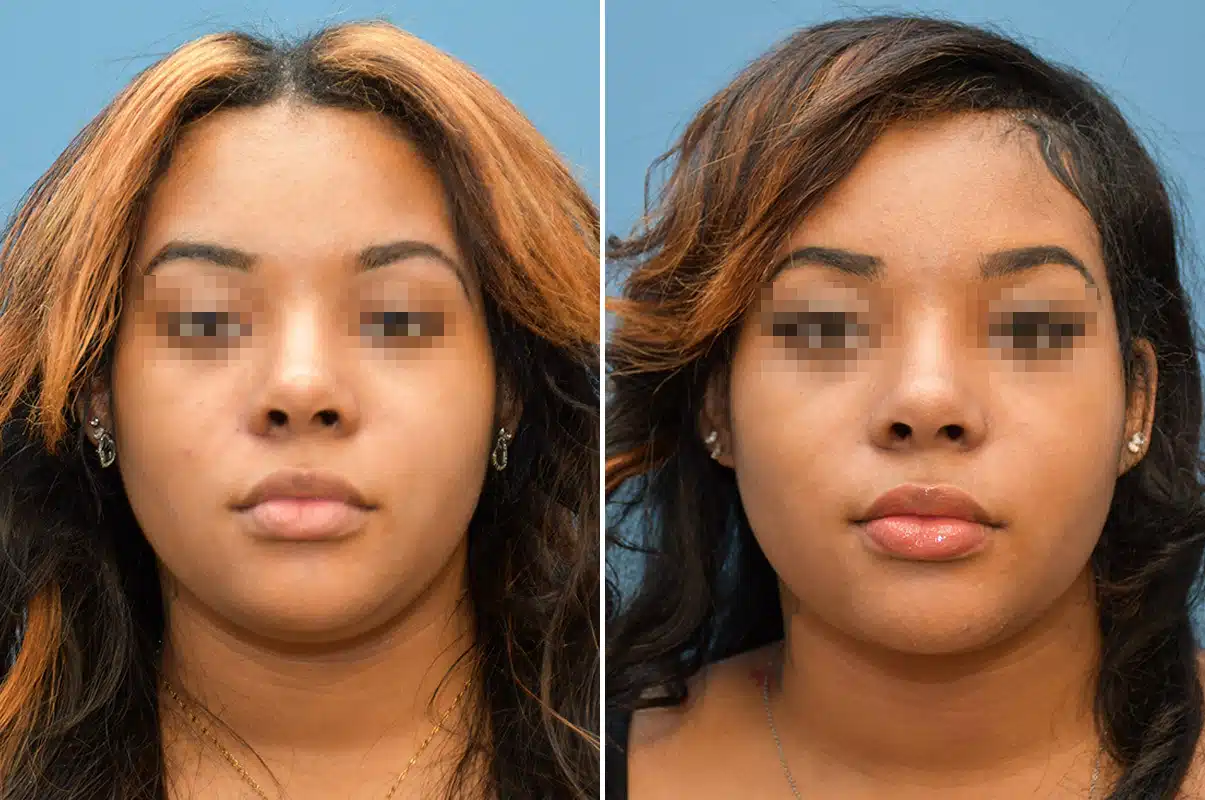
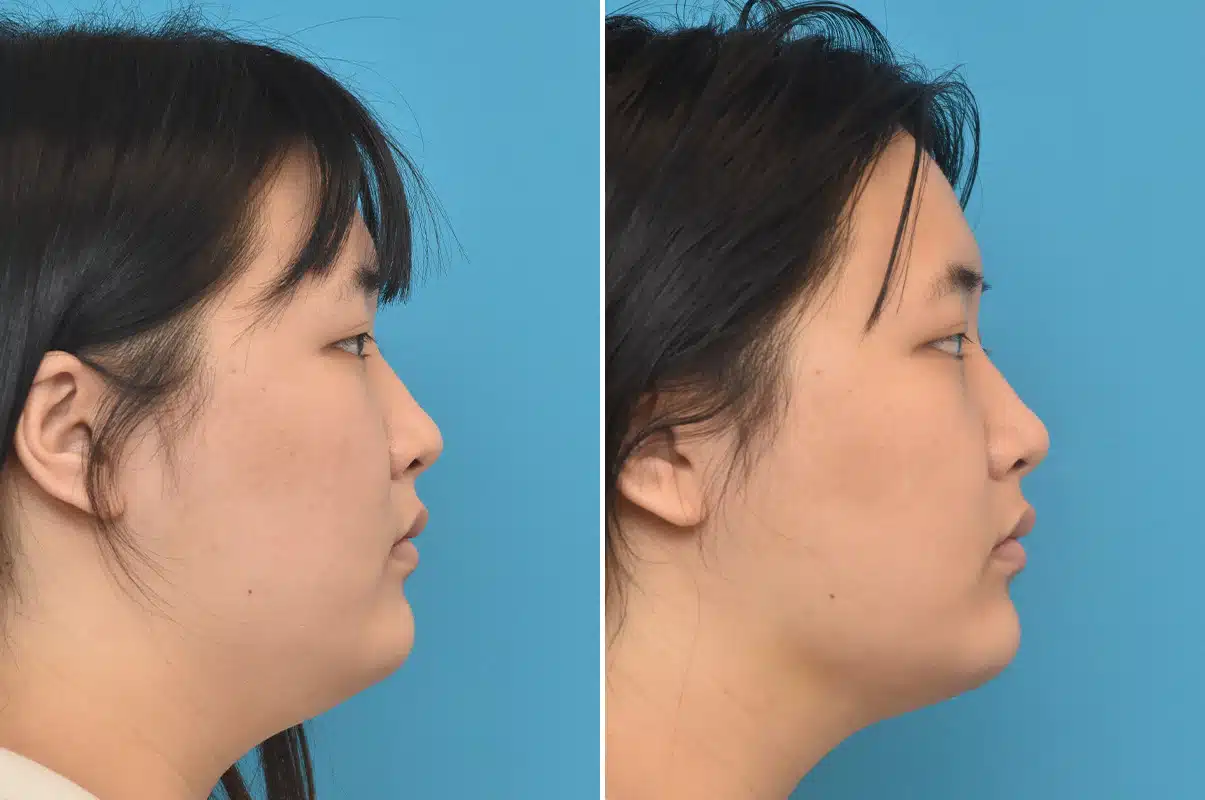
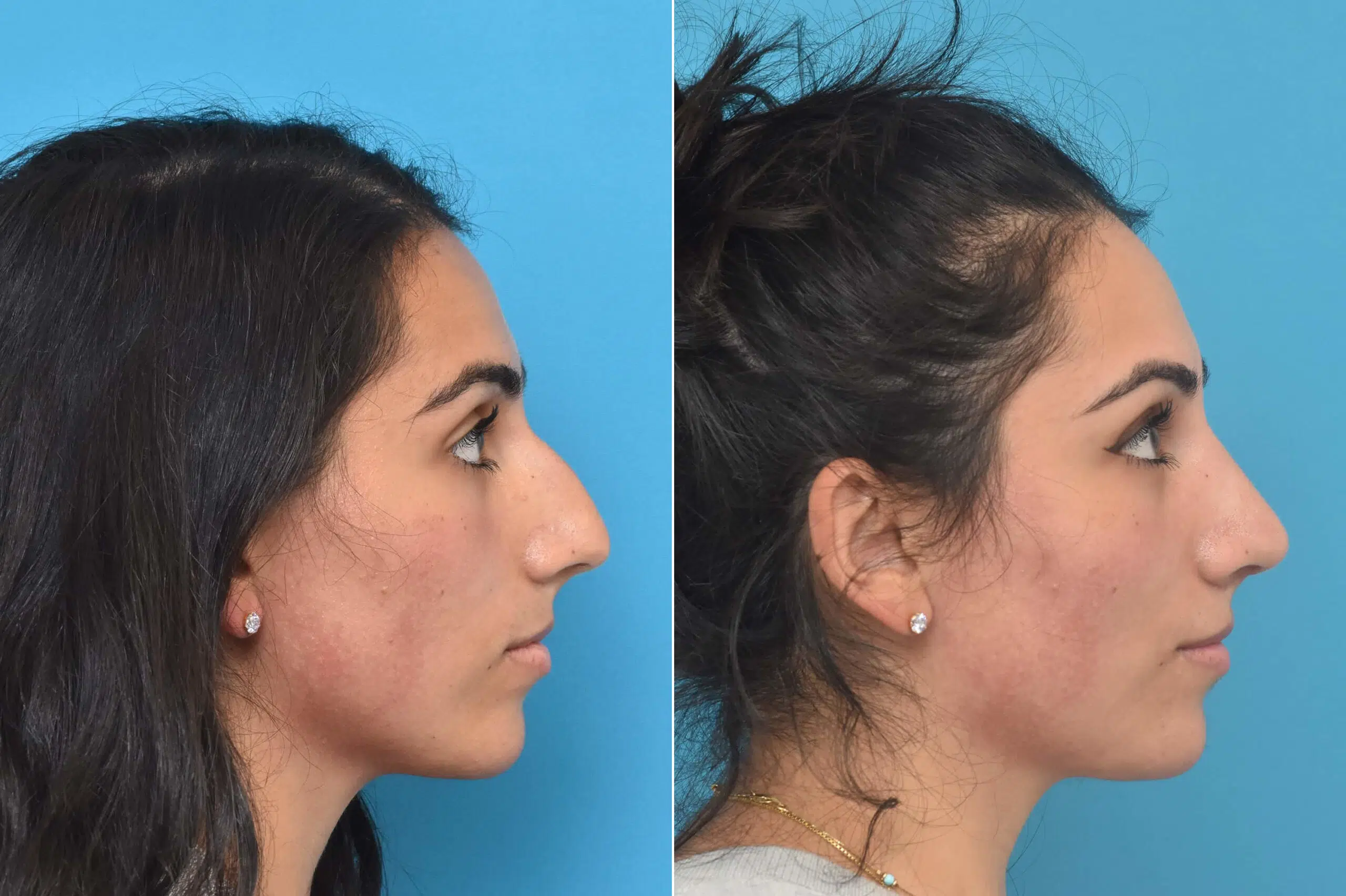
Ethnic rhinoplasty results appear gradually as swelling resolves and the nasal structure settles.
* All patients are unique and individual results may vary.
What to Expect From Your Results
Following Your Surgical Plan for Sustainable Results
Recovery and Aftercare for Ethnic Rhinoplasty
What to Expect During the Recovery Process
Most patients experience swelling, bruising, and pressure along the nasal bones during the first week. A splint may be worn for protection. As healing progresses, the nasal structure becomes more defined.
Special Considerations for Patients With Different Ethnic Features
Patients with thicker skin may experience prolonged swelling. Extra attention to skin care, sun protection, and gentle handling of the nose can help support long-term results.
Tips for a Smooth Healing Period
Patients are encouraged to sleep with their head elevated, avoid pressure on the nasal bridge, and follow activity restrictions. A follow-up schedule helps ensure proper healing and supports the final outcome.
Choosing a Rhinoplasty Surgeon Skilled in Ethnic Rhinoplasty
Choosing the right facial plastic surgeon is one of the most important decisions in the process. Ethnic rhinoplasty requires advanced understanding of how different ethnic features influence nasal structure and how the nose integrates with surrounding facial contours.
Our surgeons bring extensive experience performing rhinoplasty in Philadelphia, including work with various ethnicities, challenging procedures, and patients seeking both cosmetic rhinoplasty and functional improvements.
Research from Stanford University indicates that ethnicity-conscious rhinoplasty planning may help reduce complications and revision surgery. One meta-analysis reported complication rates of 8.7% vs. 17.4% and revision rates of 5.3% vs. 12.1% when comparing tailored ethnic rhinoplasty techniques with conventional methods. This is why choosing a surgeon experienced in ethnic rhinoplasty is especially important.
Patients can learn more about our approach to rhinoplasty in Philadelphia by visiting our main rhinoplasty page.
Ethnic Rhinoplasty Cost and Financing Options
Factors That Influence Ethnic Rhinoplasty Cost
Rhinoplasty cost varies depending on the complexity of the procedure, surgeon expertise, need for functional correction, and whether the surgery is primary rhinoplasty or revision rhinoplasty.
Financing Options for Ethnic Rhinoplasty Patients
Financing options may be available to help patients manage the cost of their procedure. Insurance may provide partial coverage in cases where functional rhinoplasty is required for nasal breathing issues.
Why Choose Becker for Ethnic Rhinoplasty in Philadelphia?
Becker Aesthetics & Plastic Surgery is recognized for advanced rhinoplasty techniques, personalized care, and results that support each patient’s identity.
EXPERTISE IN RHINOPLASTY FOR VARIOUS ETHNICITIES
Our Rhinoplasty surgeons in Philadelphia are experienced in treating patients from diverse backgrounds, including those seeking African American rhinoplasty, Asian rhinoplasty, Hispanic rhinoplasty, Mediterranean rhinoplasty, and mixed-ethnicity rhinoplasty. Patients from Philadelphia, New Jersey, and beyond trust our team for their expertise in complex nasal surgery.
ADVANCED TECHNIQUES AND A PERSONALIZED SURGICAL PLAN
We use advanced methods tailored to ethnic features and the needs of each patient. Whether performing functional rhinoplasty, cosmetic rhinoplasty, or reconstructive surgery, our approach prioritizes safety, balance, and natural refinement.
COMMITMENT TO RESPECTING ETHNIC FEATURES WHILE ENHANCING FACIAL BALANCE
Our philosophy centers on preserving cultural identity while providing aesthetically pleasing results. Every procedure is guided by the patient’s facial structure, goals, and long-term satisfaction.
Pick one of our 5 convenient locationsfor Your Plastic Surgery Needs
Why choose the Doctors at Becker Aesthetics & Plastic Surgery
Our practice is home to a diverse and comprehensive team of board-certified surgeons and aesthetic specialists. By bringing together a wide range of expertise and decades of combined experience, we ensure that every patient receives the highest standard of comprehensive care. Get to know some of the dedicated professionals behind our outstanding, natural-looking results.

- Board Certified by the American Board of Otolaryngology (ENT).
- Board Certified by the American Board of Facial Plastic and Reconstructive Surgery (ABFPRS).
- Fellow of the American College of Surgeons (FACS).
- Top-Rated by US News and World Report, Philadelphia Magazine, South Jersey Magazine, Castle-Connelly, and others.
- Read more about rhinoplasty specialist Dr. Becker’s credentials

- She is a double board certified surgeon in Facial Plastic and Reconstructive Surgery and Otolaryngology & Head/Neck Surgery.
- Is a member of the American Academy of Facial Plastic and Reconstructive Surgery.
- Has over 20 years of experience, 15+ years in private practice and has performed hundreds of facelift surgeries.
- Dr. Schrader Recognized as Best Plastic Surgeon by Town Topics Readers’ Choice Awards.
Ethnic Rhinoplasty FAQs
What is the difference between ethnic rhinoplasty and regular rhinoplasty?
Ethnic rhinoplasty is designed to refine the nose while preserving features that reflect a patient's cultural or ethnic background. Traditional rhinoplasty may focus on standard aesthetic ideals, whereas ethnic rhinoplasty prioritizes facial harmony without removing the characteristics that make a person's appearance unique.
Does ethnic rhinoplasty erase your ethnicity?
No. The goal of ethnic rhinoplasty is to enhance the nose while maintaining your natural identity and facial proportions. An experienced surgeon works to improve balance and function without creating an unnatural or "westernized" appearance.
Who is a good candidate for ethnic rhinoplasty?
Good candidates are healthy individuals who want to improve the appearance or function of their nose while preserving ethnic features. Patients of African American, Asian, Hispanic, Middle Eastern, Mediterranean, or mixed heritage often seek this specialized approach, but every treatment plan is individualized.
Is ethnic rhinoplasty more difficult than traditional rhinoplasty?
It can be. Differences in skin thickness, cartilage strength, nasal projection, and structural support often require specialized techniques and careful planning. This is why many patients seek surgeons with extensive experience performing ethnic rhinoplasty.
How long does it take to see the final results of ethnic rhinoplasty?
While most swelling improves within the first few weeks, final results can take 12 to 18 months to fully develop, especially in patients with thicker skin. The nose gradually refines as healing progresses.
What ethnicities benefit from ethnic rhinoplasty?
Ethnic rhinoplasty can benefit patients of many backgrounds, including African American, Asian, Hispanic or Latino, Middle Eastern, Mediterranean, South Asian, and mixed ethnicity. The procedure is customized to each person's unique anatomy rather than ethnicity alone.