Considering a facelift at 30? You want to preserve a youthful appearance as fine wrinkles and early laxity start to change how your face looks. This guide explains options for aesthetic enhancement at a younger age, helping you understand candidacy, benefits, and limits so you can plan confidently and realistically.
We will walk through timing, outcomes, and expectations to help you choose treatments that fit your lifestyle now and later. Learn when surgery makes sense, what results look like in younger patients, and which alternatives shine in your thirties so you can make informed, confident decisions with a thoughtful plan.

Is 30 Too Young for a Facelift?
There is no specific age for a facelift, only candidacy. Most 30-year-olds do not need surgery, but a carefully selected patient with moderate skin laxity, neck banding, or early jowls can qualify. Results tend to look especially natural in thicker, elastic facial tissues and can refresh a youthful look. Many people wait until their late 30s or 40s, choosing focused options like mini facelift or nonsurgical tightening first. The best path is an in-person assessment that weighs anatomy, goals, downtime, and longevity. A consultation clarifies risks, benefits, and realistic timelines.
Benefits of Getting a Facelift in Your 30s
While many people associate facelift surgery with older age, choosing to intervene earlier can offer distinct advantages. In your thirties, skin retains more elasticity, healing is typically faster, and results tend to blend seamlessly with your natural contours. Rather than correcting advanced aging, the goal shifts to preserving facial definition and slowing visible change before it fully sets in.
The Longevity of Results in Younger Skin
Younger patients tend to enjoy longer-lasting facelift results thanks to better skin quality and stronger underlying support structures. When facial tissues are lifted earlier, the improvements hold more predictably because youthful skin adapts and conforms to its new position with ease. Rather than fighting years of deep wrinkles or sagging, surgeons are fine-tuning early changes. This proactive approach can delay future aging and help maintain facial definition well into your forties and fifties without needing major revisions.
Enhanced Natural-Looking Results
When facelift surgery is performed earlier, tissues have less damage to correct, making it easier to create natural looking results without excessive tightening. Instead of repositioning heavily sagging structures, the surgeon works with subtle early changes to refine facial contours and enhance definition. The lift is gentle, preserving softness while improving structure. Youthful volume is maintained rather than replaced, allowing the outcome to blend seamlessly with the rest of your features. The goal is refinement, not transformation, which keeps the result beautifully discreet.
Reduced Recovery Times and Risks
Undergoing cosmetic surgery at a younger age often means faster recovery and fewer complications. Healthier skin and stronger circulation help incisions close more efficiently, allowing the body to heal with less scarring or swelling. Since tissues have not yet been significantly weakened by age, the procedure can be less invasive and easier to stabilize. This typically results in shorter downtime, improved comfort, and a smoother overall experience compared to patients who wait until signs of aging are more advanced.
Prevent the Need for Future Procedures
Addressing early signs of aging can minimize or delay the need for more aggressive procedures later in life. By lifting tissues before deeper sagging develops, you maintain better structure over time and slow the progression of visible aging. Instead of playing catch-up in your fifties or sixties, you are preserving what you already have. Many patients who opt for early intervention find that less maintenance is required long term, relying on minor touch-ups rather than full corrective surgeries down the road.
You May Be a Candidate for Mini Facelift Surgery
Patients with mild jawline or neck laxity may qualify for a mini facelift procedure, which targets early aging without the need for full correction. This less invasive procedure focuses on tightening key areas rather than reshaping the entire face, making it an appealing option for those in their thirties. Depending on your goals and anatomy, your surgeon may recommend this type of facelift to provide a meaningful lift with minimal downtime. It is a strategic way to refresh appearance without committing to major surgery.
Traditional Facelift Patient Results
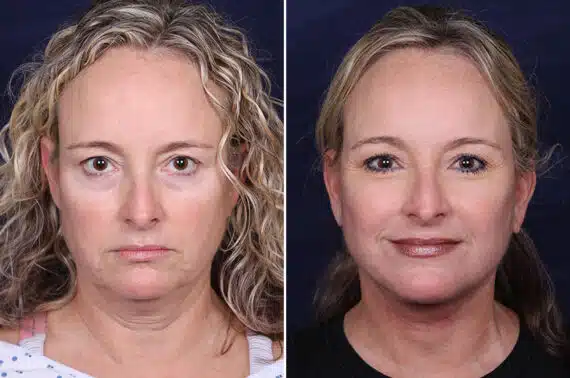
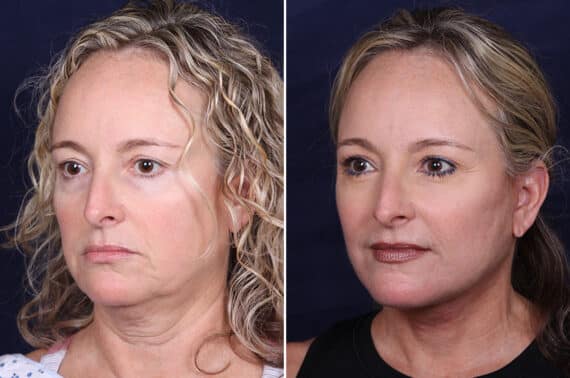
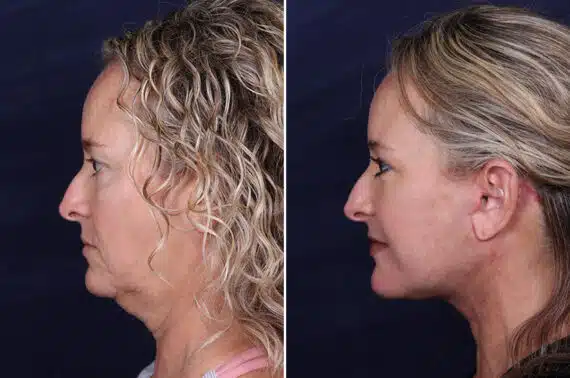
* All patients are unique and individual results may vary.
How Many Years Does a Facelift Last?
The longevity of facelift results varies because there are several facelift options, each designed for different needs and aging stages. A full facelift typically offers the most dramatic and long-lasting improvement, often maintaining definition for 10 years or more. A mini facelift delivers subtler enhancement and may last around 5 to 7 years, making it suitable for younger patients seeking earlier correction without significant change.
However, durability also depends on lifestyle factors such as sun exposure, smoking, weight fluctuations, and skincare habits. Genetics and skin elasticity play a major role in how long tissues stay lifted as well. While no procedure can stop time, choosing the right technique at the right moment helps you enjoy lasting benefits and age more gradually over the years.
Considerations Before the Procedure
Before committing to surgery, it is important to evaluate your facial structure and how much change is actually needed. A facelift is most beneficial when there is a noticeable degree of facial aging, such as laxity around the cheeks or jawline. However, if volume loss is your primary concern, less invasive cosmetic procedures like dermal fillers may provide the improvement you are looking for without downtime. Not everyone showing early aging signs automatically requires surgical intervention.
A consultation with a qualified specialist helps determine whether lifting or replenishing facial volume will give you the best outcome. Many patients are surprised to learn there are multiple facial rejuvenation options that range from nonsurgical treatments to more advanced techniques. The right choice ultimately depends on anatomy, goals, and how proactively you wish to manage aging. Surgery is one pathway, but timing and approach should always be personalized.
Looking for Facial Rejuvenation?
Experience world-class treatment from our top-rated providers at Becker Aesthetics & Plastic Surgery.
Consult with a Facial Plastic Surgery Specialist
Choosing the right expert matters. A skilled facial plastic surgeon understands facial anatomy, tissue behavior, and the nuances of vector-based lifting that create natural contours without tension. Experienced hands help you avoid overcorrection, reduce risks, and align expectations with what is surgically achievable. Your outcome is shaped by the surgeon’s judgment as much as their technique.
At Becker Aesthetics & Plastic Surgery, our team blends extensive facial rejuvenation experience with the precision of ENT-trained surgeons, delivering balanced results for patients across Philadelphia, Yardley, Princeton, Sewell, Voorhees, and Hillsborough. We tailor plans to your features, goals, and lifestyle, and we are happy to review surgical and nonsurgical options. Ready to take the next step? Visit our contact page to schedule a consultation, or check our locations page for the phone number in your city.