Rhinoplasty remains one of the most requested cosmetic procedures for improving facial balance and refining the appearance of the nose. Today, patients often have two primary options: liquid rhinoplasty using dermal fillers or traditional rhinoplasty performed as a surgical procedure. While both treatments can improve nasal shape, they differ significantly in results, recovery, and long-term outcomes.
Understanding the differences between liquid rhinoplasty vs traditional rhinoplasty helps patients choose the option that aligns with their cosmetic goals, recovery preferences, and expectations for results. At Becker Aesthetics & Plastic Surgery in Philadelphia, PA, experienced surgeons evaluate each patient’s anatomy and concerns to recommend the safest and most effective treatment approach.

What to Know Before Choosing a Nose Procedure
- Liquid rhinoplasty uses hyaluronic acid fillers to create subtle changes without surgery.
- Traditional rhinoplasty reshapes cartilage and bone for long-lasting results.
- Recovery time and downtime differ significantly between the two procedures.
- Surgical rhinoplasty can correct breathing issues and structural concerns.
- A consultation with an experienced plastic surgeon helps determine the most appropriate option.
What Is Liquid Rhinoplasty?
Liquid rhinoplasty, sometimes called a liquid nose job or nonsurgical rhinoplasty, is a minimally invasive treatment that reshapes the nose using injectable fillers. This procedure typically uses hyaluronic acid fillers to add volume and refine contour without incisions or anesthesia.
Instead of removing or restructuring tissue, liquid rhinoplasty enhances the nasal bridge or nasal tip by strategically placing dermal fillers. By adjusting contour and light reflection, the treatment can improve symmetry and create the appearance of a smoother or straighter profile.
Because it is not a surgical procedure, liquid rhinoplasty is performed in the office and typically takes less than 30 minutes. Patients usually return to normal activities quickly, making it an appealing option for those seeking subtle improvements with minimal recovery.
How Dermal Fillers Create Subtle Changes
Hyaluronic acid fillers are gel-like substances that integrate with the skin and underlying tissue. During liquid rhinoplasty, a qualified provider with advanced training in nasal anatomy carefully places injectable fillers to refine nasal shape while preserving natural facial features.
Common areas treated include:
- Smoothing a bump along the nasal bridge
- Improving symmetry in a crooked nose
- Enhancing the nasal tip
- Creating a straighter profile
- Refining minor irregularities
Although liquid rhinoplasty is less invasive than surgery, the nose contains complex blood vessels and delicate structures. Treatment should always be performed by an experienced provider working under the supervision of a plastic surgeon to ensure safety and precision.
What Liquid Rhinoplasty Cannot Fix
While liquid rhinoplasty offers meaningful benefits, it also has limitations. Because it adds volume rather than removing tissue, it cannot:
- Reduce overall nose size
- Narrow wide nostrils
- Correct major structural deformities
- Improve breathing issues or nasal function
- Provide long-lasting structural changes
For patients seeking significant structural changes or functional correction, surgical rhinoplasty is typically the better option.
Liquid Rhinoplasty Patient Results
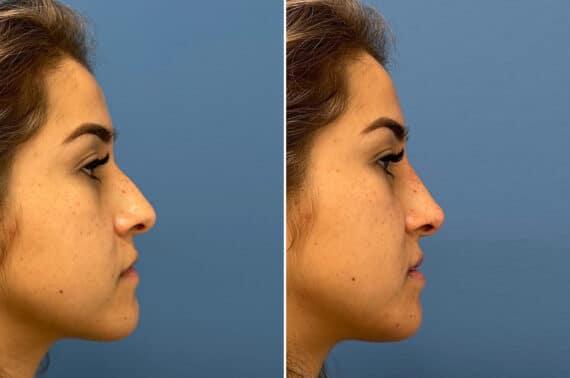
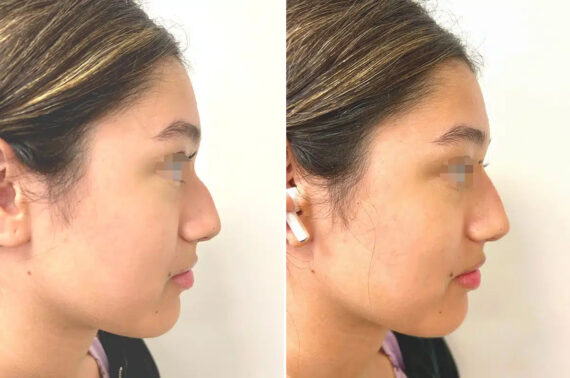
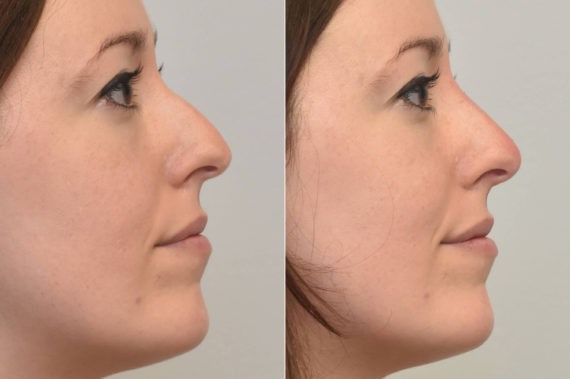
* All patients are unique and individual results may vary.
What Is Traditional Rhinoplasty?
Traditional rhinoplasty is a surgical procedure that reshapes cartilage and bone to alter the nose. This approach allows comprehensive structural changes that cannot be achieved with fillers.
During rhinoplasty surgery, a surgeon may reshape cartilage, refine the nasal tip, reduce a dorsal hump, correct asymmetry, or adjust the nasal bridge. The procedure may be performed using open rhinoplasty or closed rhinoplasty techniques, depending on the complexity of the case.
Because traditional rhinoplasty modifies underlying nasal structures, it can address both cosmetic concerns and functional issues.
What Surgical Rhinoplasty Can Correct
Traditional rhinoplasty provides a wider range of correction than nonsurgical treatments. It can address concerns such as:
- Significant asymmetry or crooked nose
- Large nasal size or disproportionate nasal shape
- Prominent dorsal hump
- Nasal tip refinement or repositioning
- Structural damage from injury
- Breathing issues and impaired nasal function
- Complex nasal deformities
How Surgery Reshapes Nasal Structure
Traditional rhinoplasty is performed under anesthesia and involves precise surgical adjustments to cartilage and bone. Small incisions are made either inside the nose or across the columella depending on the approach.
In some cases, cartilage grafts may be used to support or rebuild nasal structure. Because this surgery creates long-term structural changes, careful planning is essential to achieve balanced, natural-looking results that complement surrounding facial features.
Rhinoplasty Patient Results
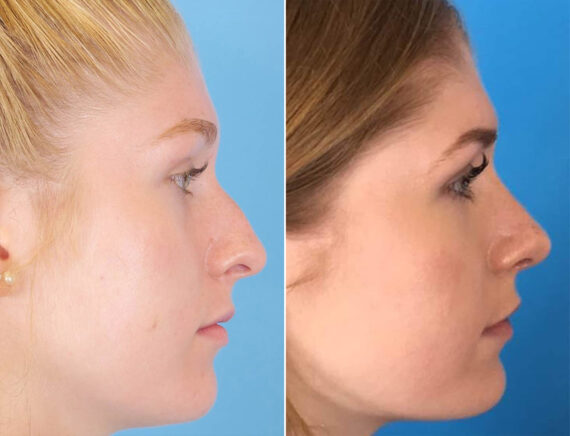
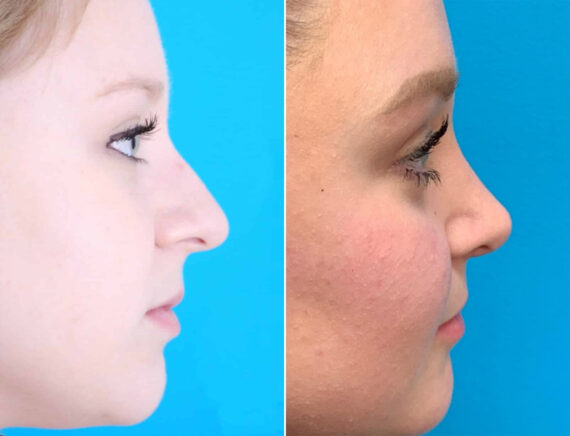
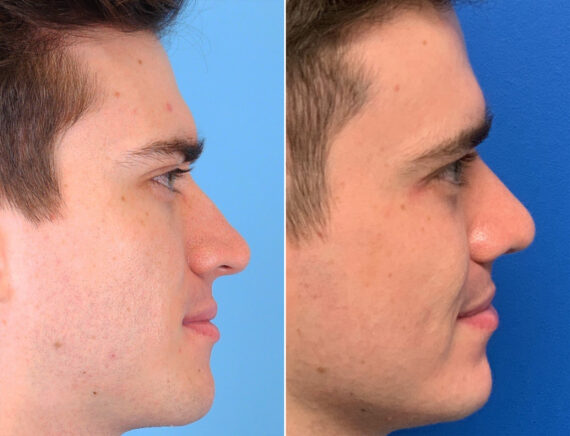
* All patients are unique and individual results may vary.
Key Differences Between Liquid and Traditional Rhinoplasty
Permanence of Results
Liquid rhinoplasty produces temporary results. Hyaluronic acid fillers gradually break down, and maintenance treatments are required to preserve the outcome.
Traditional rhinoplasty provides long-lasting results because it reshapes nasal structure through surgery. While natural aging continues, the structural changes made during rhinoplasty surgery are designed to be enduring.
Downtime and Recovery
Recovery after liquid rhinoplasty is typically minimal. Patients may experience mild swelling or redness but often resume normal activities within a day.
Recovery after surgical rhinoplasty is more involved. Swelling and bruising are common, and a splint is usually worn for about one week. While most patients return to daily activities within one to two weeks, final rhinoplasty results may take months to fully refine.
Structural Changes and Functional Improvement
Liquid rhinoplasty improves contour by adding volume but cannot change underlying nasal structure.
Traditional rhinoplasty reshapes cartilage and bone, allowing correction of structural issues and breathing problems.
Potential Side Effects and Risks
Both treatments carry risks, though they differ in nature.
Liquid rhinoplasty risks include:
- Temporary swelling or redness
- Vascular complications
- Skin injury
- Need for repeat treatments
Surgical rhinoplasty risks include:
- Bleeding or infection
- Anesthesia-related risks
- Swelling and bruising
- Possible revision rhinoplasty
An experienced plastic surgeon helps minimize risks and ensure safe treatment.
Pros and Cons of Each Rhinoplasty Option
Pros of Liquid Rhinoplasty
Liquid rhinoplasty offers several benefits for appropriate candidates:
- Minimally invasive procedure
- No incisions
- Immediate visible results
- Short recovery time
- Reversible with hyaluronidase
Cons of Liquid Rhinoplasty
- Temporary results
- Limited structural correction
- Cannot improve breathing issues
- Requires maintenance treatments
Pros of Traditional Rhinoplasty
Traditional rhinoplasty provides comprehensive benefits:
- Long-lasting results
- Ability to reshape cartilage and bone
- Correction of breathing issues
- Significant improvement in nose shape
- Long-term structural enhancement
Cons of Traditional Rhinoplasty
- Temporary swelling during healing
- Surgical procedure with incisions
- Longer recovery period
- Higher initial rhinoplasty costs
Get the right approach for your nose
Experience world-class treatment from our top-rated providers at Becker Aesthetics & Plastic Surgery in Philadelphia.
Who Is a Good Candidate for Each Option?
The best option depends on a patient’s anatomy, goals, and expectations.
Liquid rhinoplasty may be appropriate for patients who:
- Want subtle cosmetic refinement
- Prefer a minimally invasive procedure
- Are exploring potential changes before surgery
- Do not require functional correction
Traditional rhinoplasty may be recommended for patients who:
- Desire long-lasting surgical results
- Need structural or functional correction
- Want significant changes in nasal size or shape
- Have complex nasal concerns
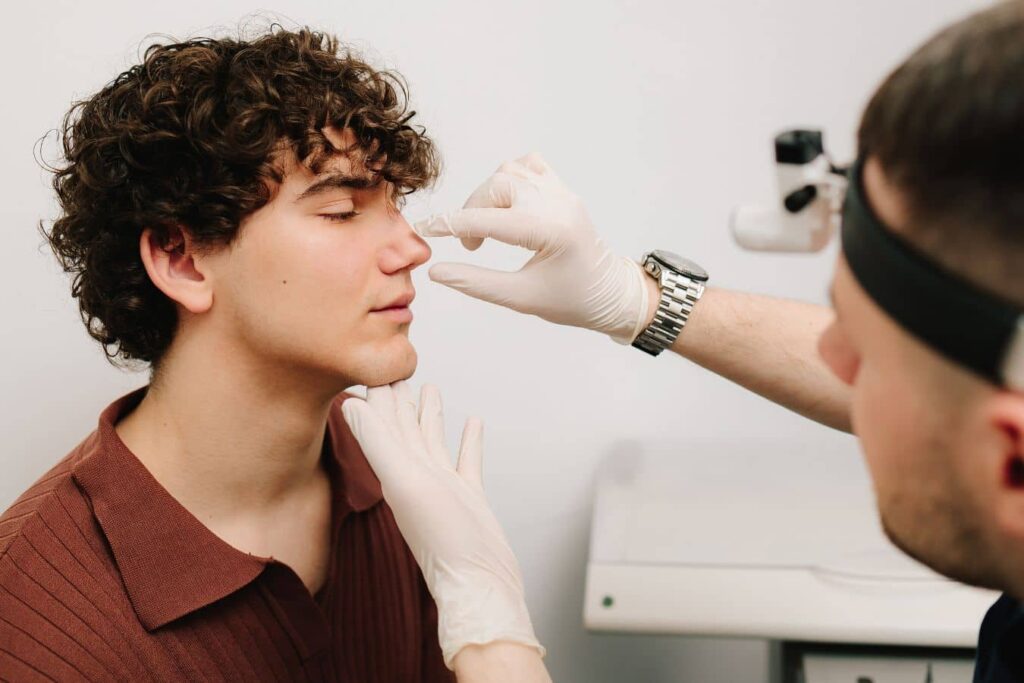
During consultation at Becker Aesthetics & Plastic Surgery, surgeons evaluate skin thickness, cartilage structure, and facial features to determine the most appropriate treatment.
Why Choosing the Right Surgeon Matters
Both liquid rhinoplasty and traditional rhinoplasty require advanced knowledge of nasal anatomy and facial balance. The nose contains delicate blood vessels and plays a critical role in breathing and overall facial harmony.
Choosing an experienced plastic surgeon helps ensure safe treatment, natural-looking results, and a personalized approach to care. At Becker Aesthetics & Plastic Surgery, patients benefit from specialized experience in facial plastic surgery and rhinoplasty procedures.
Schedule a Consultation at Becker Aesthetics & Plastic Surgery in Philadelphia, PA
Choosing between liquid rhinoplasty vs traditional rhinoplasty requires careful evaluation of your cosmetic goals, nasal structure, and desired results. At Becker Aesthetics & Plastic Surgery in Philadelphia, patients receive personalized recommendations based on their anatomy and long-term expectations.
A consultation allows you to discuss concerns, explore treatment options, and develop a customized plan designed to enhance facial balance and achieve natural-looking rhinoplasty results.
Frequently Asked Questions